
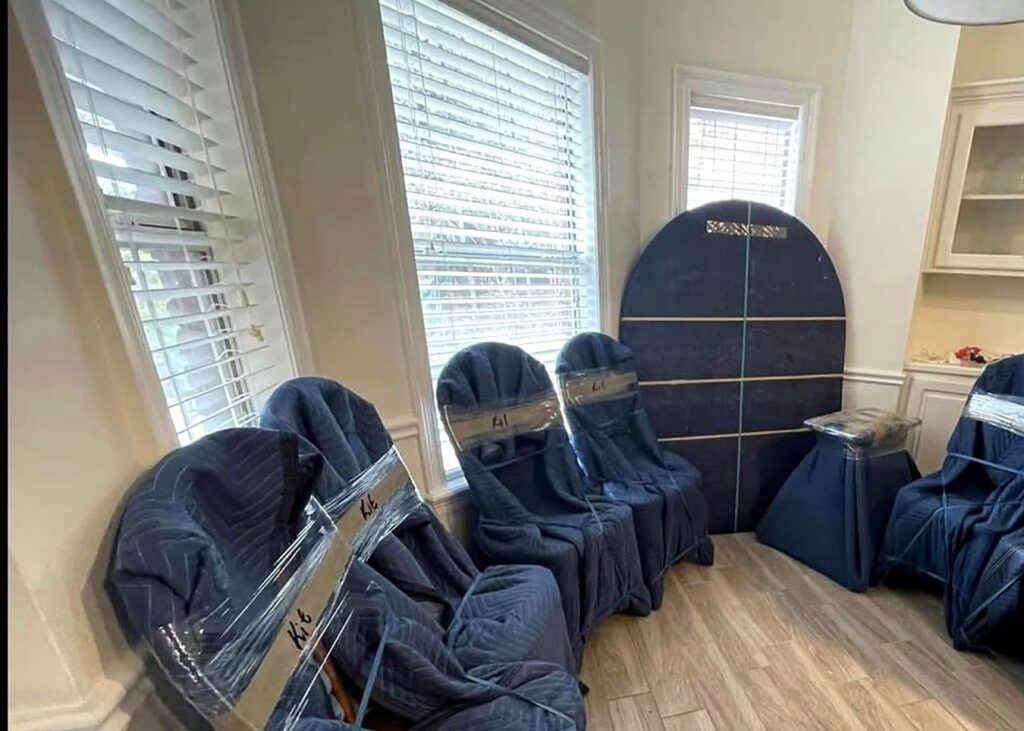
It happens on almost every move we do. The sectional that fit perfectly in the old family room is two feet too long for the new one. The dining set for ten is headed to a home with a breakfast nook. Or Mom and Dad are moving from a four-bedroom colonial to a two-bedroom condo, and there’s a whole basement to sort through.
Deciding what to do with furniture that won’t fit is one of the hardest parts of a move, mostly because it’s emotional and it usually gets left to the last week. Here’s how we help our own friends and family through it, without the stress of deciding on move day.
1. Measure first, decide second
Most “will it fit?” questions can be answered weeks ahead with a tape measure and the listing’s floor plan.
- Measure the big pieces: height, width and depth of sofas, sectionals, beds, dressers, armoires and dining tables. For sofas, also measure the diagonal depth (from the back top corner to the front bottom edge). That’s the number that decides whether it can tilt through a doorway.
- Measure the path at the new home: front door, interior doorways, stair width, the turn at the landing and any low ceilings on the stairs. Older homes in Doylestown, Lansdale and the Lehigh Valley often have narrow, turning staircases that are tighter than they look.
- Tape it out. If you can get into the new home before closing, mark the footprint of your biggest pieces on the floor with painter’s tape. It’s the fastest way to see whether a room still has walking space.
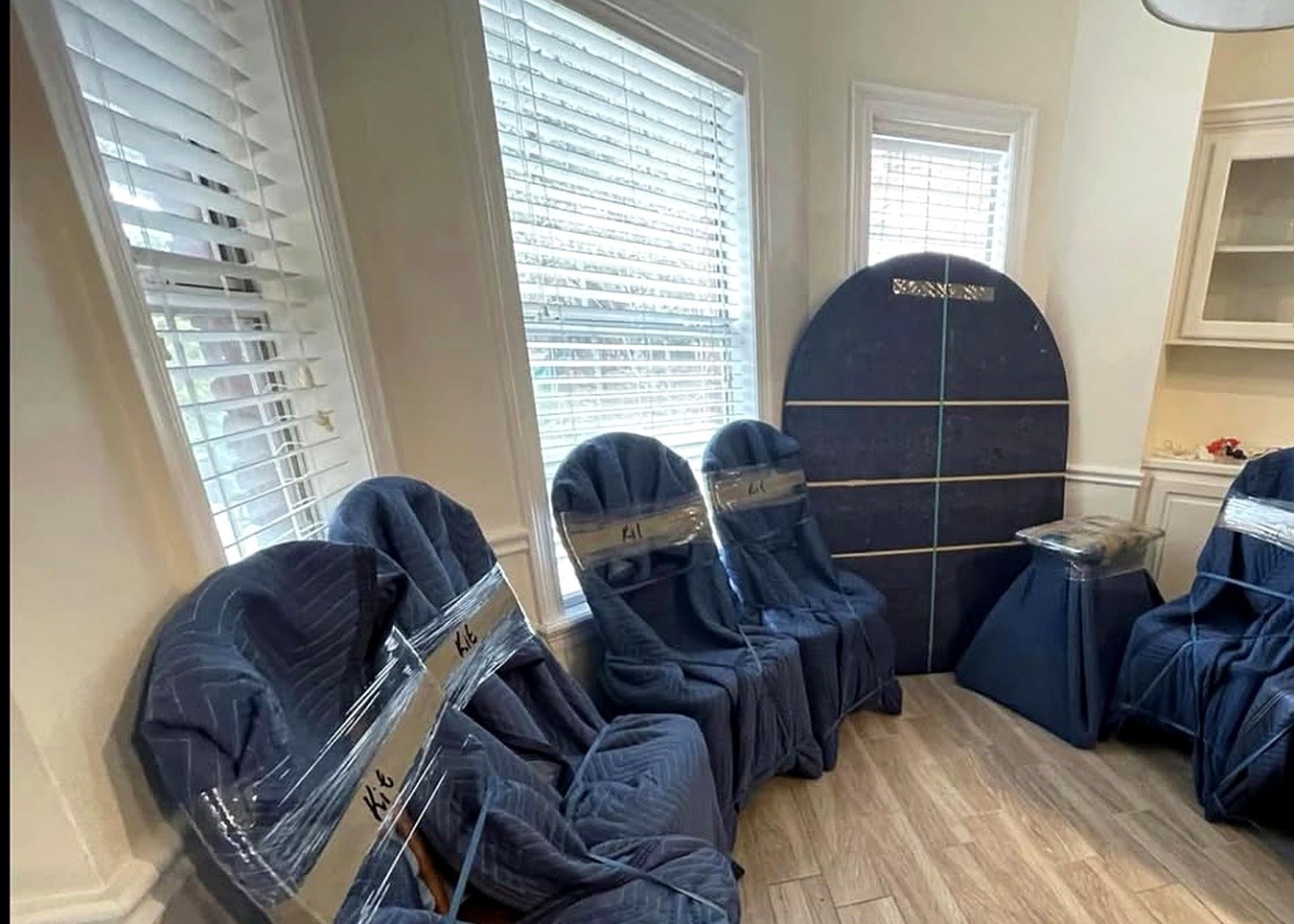
If a piece is close, tell your mover about it ahead of time. Many sofas, beds and tables can come apart, and our crews take apart and put back together furniture on most moves. More on that on our furniture assembly page.
2. Sort everything into five groups
Walk through the house room by room and give every large piece one of five labels. Colored sticky notes work great.
- Keep: it fits, you use it and you love it.
- Store for now: you’re not ready to decide, it’s a family piece, or it’s meant for a future home.
- Give to family: a grown child’s first apartment, a sibling, a grandchild.
- Donate or sell: good condition, but not for you anymore.
- Haul away: broken, stained or worn past the point anyone else would want it.
A few questions that make the calls easier: Have we used it in the last year? Would we buy it again today? Does it fit the new room and the way we’ll live there? If the honest answer is “I don’t know,” that piece belongs in the store-for-now group, not the trash.
3. When you’re not sure, store it
Some decisions shouldn’t be rushed. Grandma’s hutch, the crib you might want someday, a sofa you’ll want once the basement is finished. Storage gives you time to live in the new house first and decide later.
Storage also helps when your closing dates don’t line up, or when you’re selling first and buying second. We load your things once, seal them in storage vaults at our own warehouse in Quakertown, and unload them once at your new home, so they stay together and aren’t handled again in between. Here’s how move-and-store works between homes, and our moving and storage page has the details.
4. Donate or sell what still has life in it
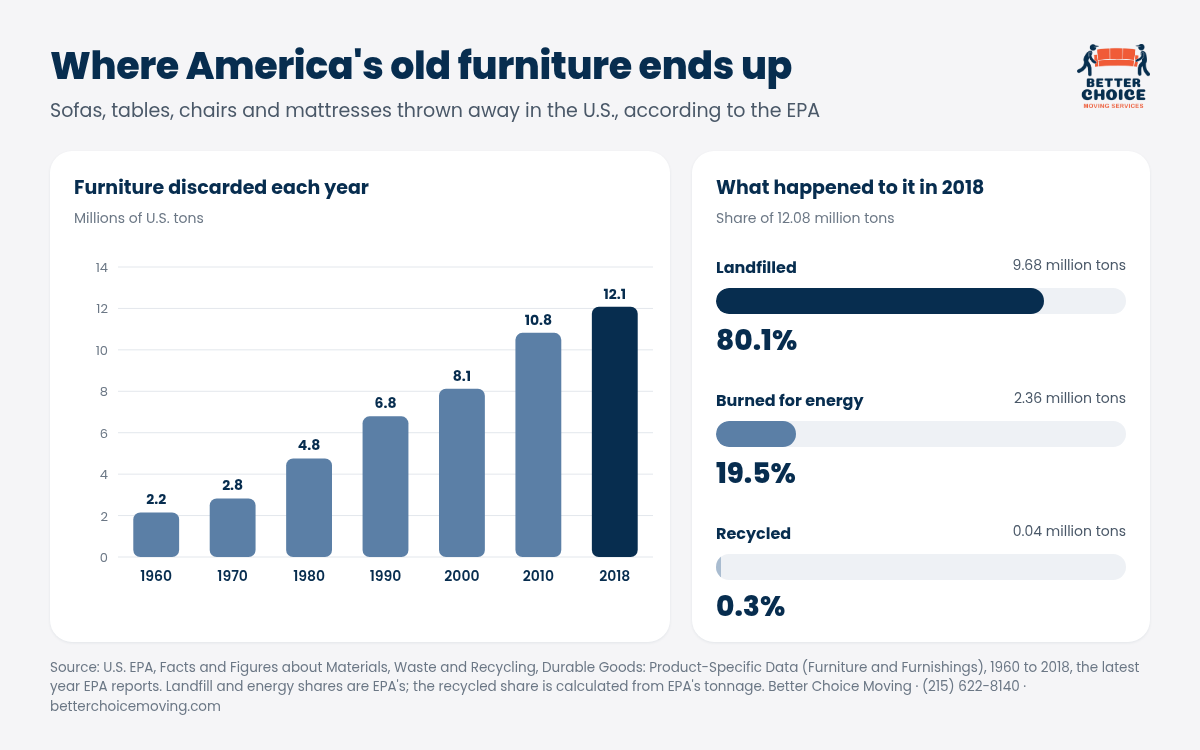
Good furniture deserves a second home, and the numbers show why it matters. According to the EPA, Americans discarded about 12.1 million tons of furniture and furnishings in 2018, more than five times as much as in 1960. About 80% of it went to landfills, and almost none of it was recycled.
A few tips for giving furniture a second life:
- Call ahead. Donation centers and charity pickup programs have their own rules. Many won’t take mattresses, cribs, or upholstered pieces with stains, tears or pet damage. Ask what they accept before you load the car.
- Book pickups early. Free charity pickups often book up a few weeks out, especially at the end of the month when lots of people are moving. Schedule them before your move week, not during it.
- Take photos for selling. Solid wood pieces, name-brand sofas and outdoor furniture usually sell best. Clear photos and measurements in the listing save a lot of back-and-forth.
- Set a deadline. Anything that hasn’t sold a week before the move gets donated. That keeps unsold items from riding to the new house by default.
- Keep a list for taxes. If you itemize, write down what you donated and ask for a receipt. Your tax preparer can tell you what counts.
5. Haul away the rest the right way
Some things really are done. For those, plan ahead so they don’t end up on the curb on move day.
- Check your township’s bulk pickup rules. Many townships in Montgomery, Bucks, Chester and Lehigh counties limit bulk items per week or require you to schedule them, and some charge a fee. Your trash hauler or township website has the details.
- Set aside anything hazardous. Paint, chemicals, propane tanks and old electronics can’t go out with regular trash. Your county’s household hazardous waste and electronics collection events are the right place for them.
- Do it before move day if you can. A clear basement and garage make move day faster and safer for everyone.
Our crews already handle heavy, awkward furniture every day, so we also do junk removal and cleanouts. Good pieces get set aside for donation first, and only what’s truly done gets hauled away.
A simple timeline for furniture decisions
- 6 to 8 weeks out: measure your big pieces and the new home, and do your first room-by-room sort.
- 4 to 6 weeks out: offer pieces to family, list items for sale, and book charity pickups.
- 2 to 3 weeks out: decide what goes into storage and let your mover know, so the plan and the truck are set up for it.
- Move week: donate anything unsold, schedule haul-away for what’s left, and mark every piece that isn’t coming so nothing gets loaded by mistake.
For the rest of the plan, see our 8-week moving checklist and our move-week game plan. If you’re helping a parent downsize, our senior moving page covers how we take it slow and keep the family in the loop.
Not sure what will fit? We’re happy to help.
We’ve helped a lot of families in our area figure out what comes along, what waits in storage and what finds a new home. If you have a question about a piece, a tight staircase or how storage would work for you, give us a call at (215) 622-8140 or visit betterchoicemoving.com. When you’re ready, you can schedule a free estimate or book your move online.
About the chart: figures come from the U.S. EPA’s Durable Goods: Product-Specific Data for furniture and furnishings, 1960 to 2018, the most recent year EPA reports. The recycled share is calculated from EPA’s tonnage.