
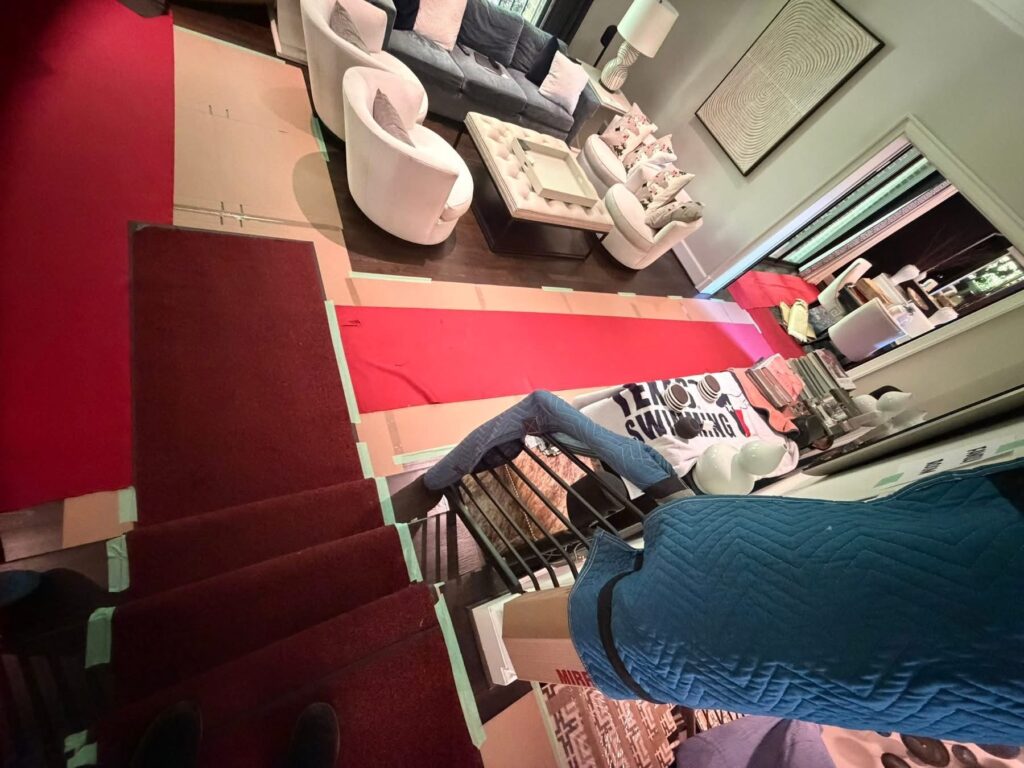
Ask anyone who has moved a few times what they worried about most, and a lot of them won’t say their furniture. They’ll say the house. The hardwood they just had refinished. The white trim on the stairs. The front door they painted last spring. When you’re selling, the home you’re leaving matters just as much, because the buyers’ final walkthrough is usually right after the truck pulls away.
The good news is that almost all move-day damage to a home happens in the same handful of places, and almost all of it is preventable. Here’s how our crews protect a home, and the simple things you can do before move day so the house looks the same when everyone leaves as it did when they arrived.
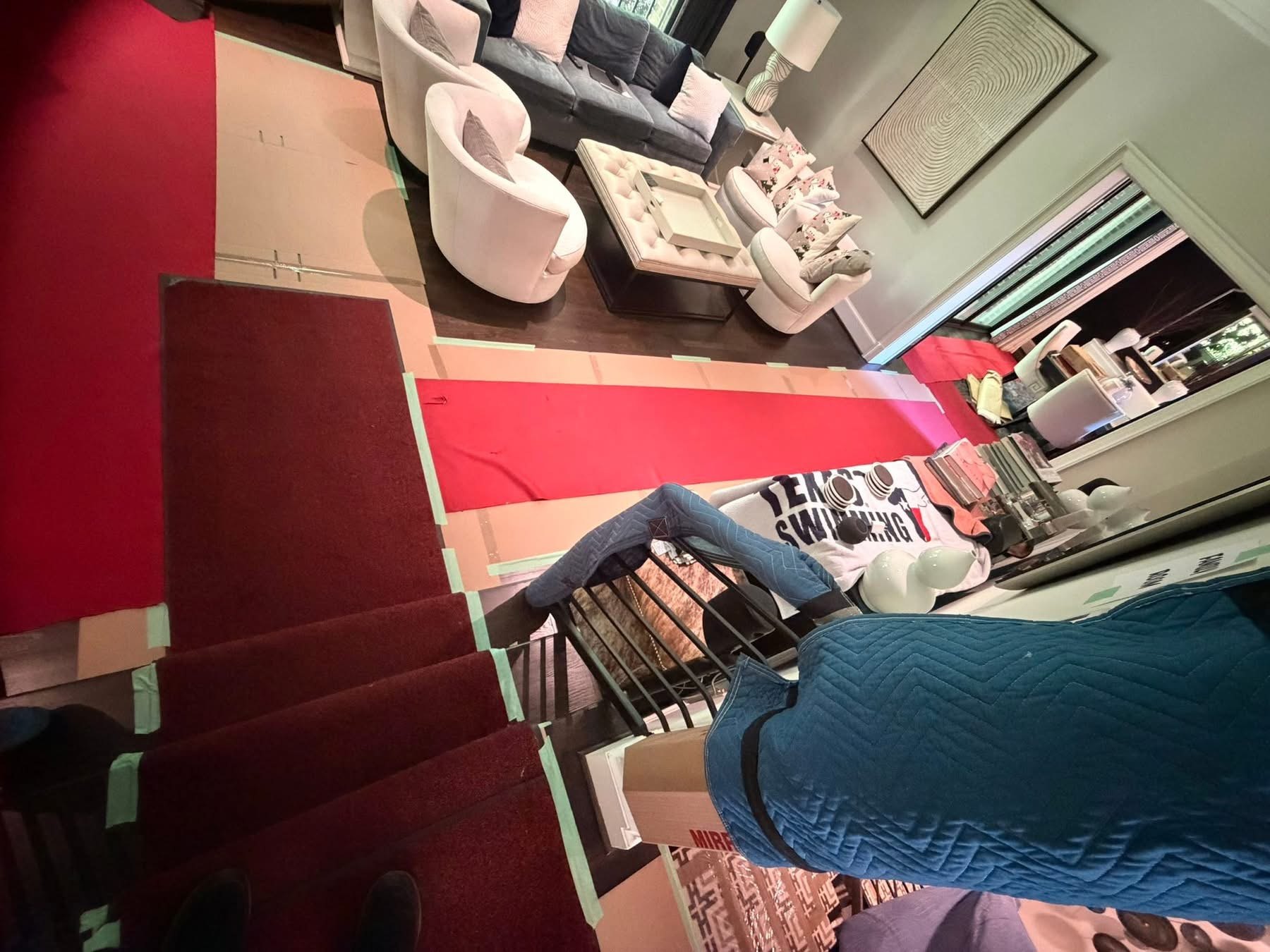
Where homes actually get scuffed
It’s rarely the middle of a room. Damage almost always happens at the pinch points, where a heavy piece has to turn, tilt or squeeze through:
- Doorways and door frames, especially the turn from a hallway into a bedroom.
- Stairs and banisters, where a dresser or sofa has to pivot at the landing.
- The front entry, where every single item passes through, trip after trip.
- Floors along the main path, where grit tracked in from outside gets ground into hardwood, tile or stone.
Plan the protection around those spots, and you’ve covered most of the risk.
How we protect a home, area by area
Before the first box moves, our crews set up the home. Here’s what that looks like, along with what helps on your end.
Floors: runners on every path
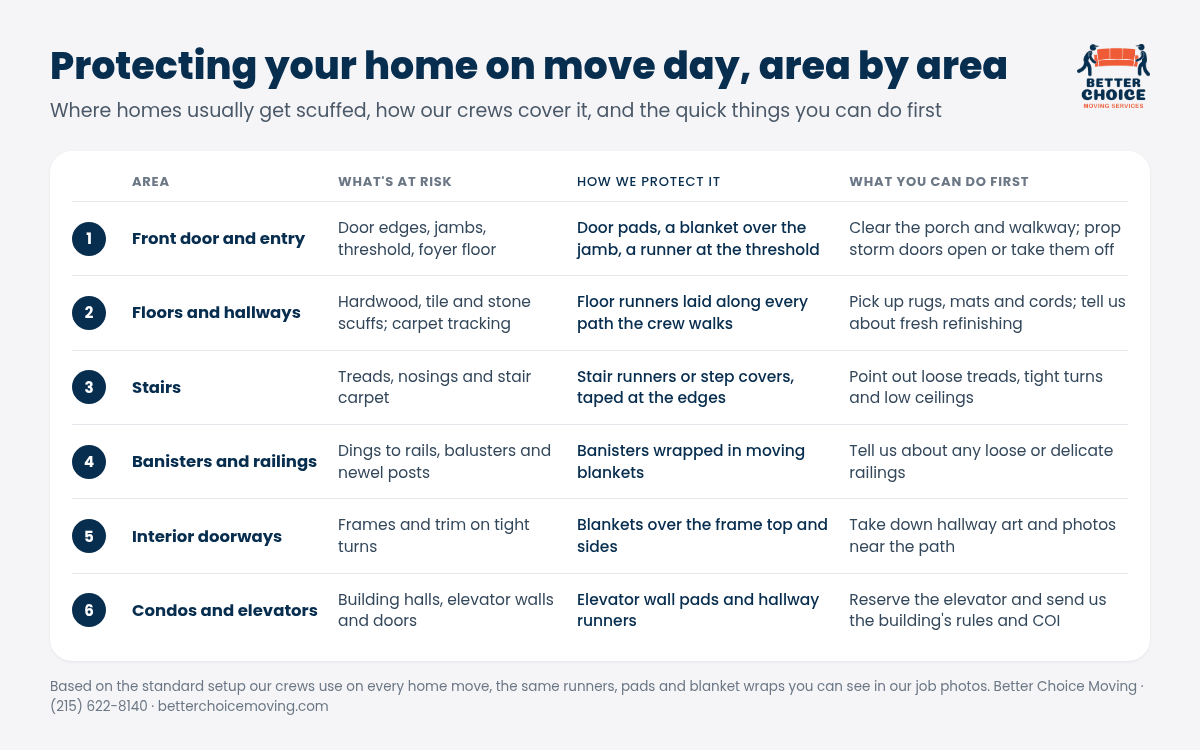
We lay floor runners along the routes the crew will walk: from the front door, down the hallways and into each room we’re working in. Runners keep grit off hardwood and stone and stop the slow wear of dozens of trips back and forth. If you just had floors refinished, tell your mover how recently. Fresh finishes can take time to fully cure, and your flooring installer can tell you when it’s safe to put heavy traffic and furniture on them.
Stairs and banisters: covered and wrapped
Stairs get runners or step covers, taped down at the edges so nothing slides. Banisters, railings and newel posts get wrapped in moving blankets, since a rail is exactly where the corner of a dresser wants to land on a tight turn. If a railing is loose or a tread squeaks, point it out. It changes how the crew plans to carry big pieces down.
Doors and doorways: padded where pieces turn
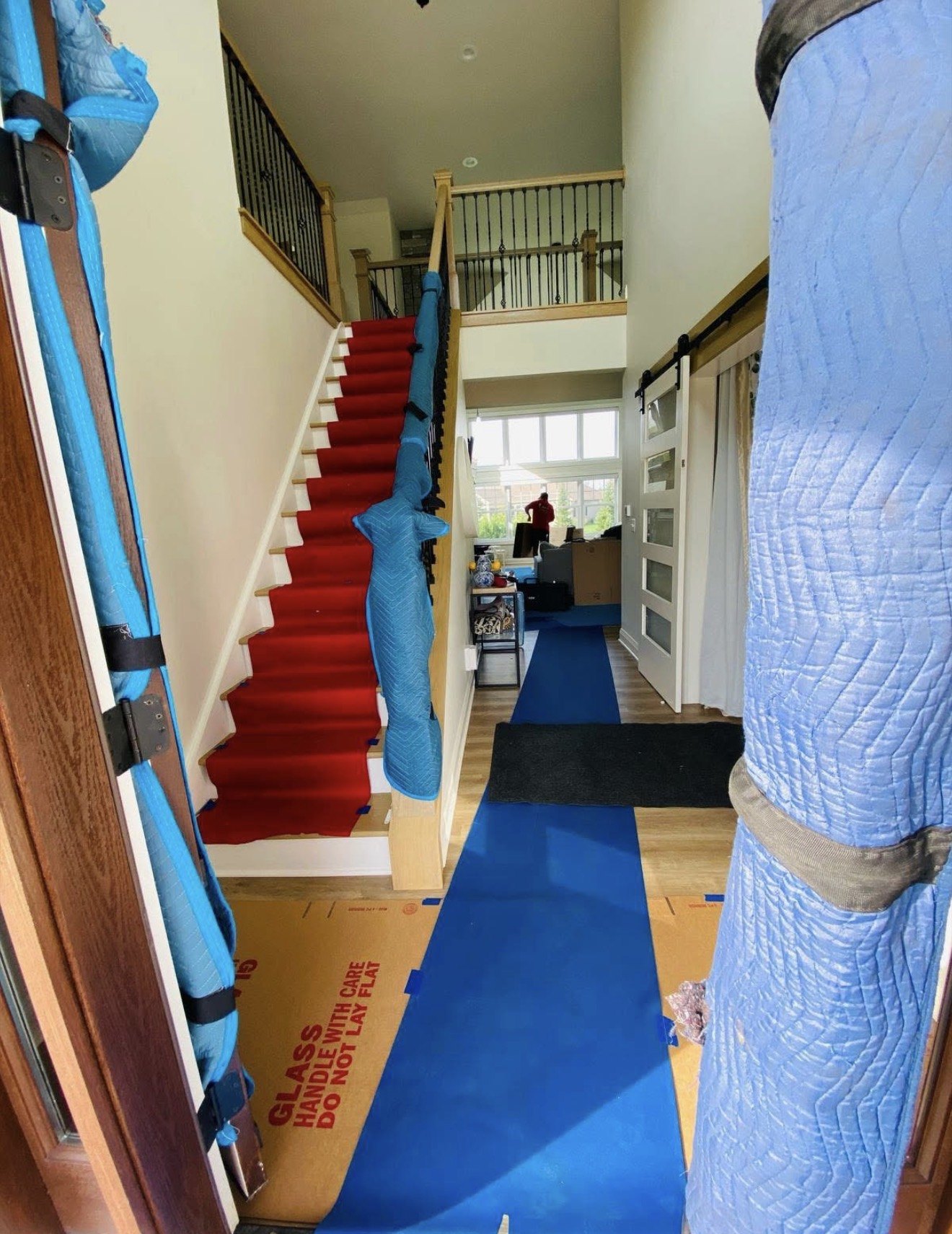
We pad door edges and drape blankets over the top and sides of door frames on the main path, so a mattress or headboard brushing the trim doesn’t leave a mark. At the front door, that’s paired with a runner across the threshold, since that one doorway sees more traffic than any other spot in the house.
Condos, apartments and elevators
Buildings have their own rules. Many require a reserved elevator time, elevator wall pads, runners in common hallways and a certificate of insurance (COI) from the mover before move day. Get the building’s move rules early and send them to your mover, so the paperwork is done well ahead of time. Our apartment movers page covers how building moves work.
What you can do before move day
A little prep goes a long way, and none of it takes more than an evening:
- Walk the path. Go from each room to the front door the way a big piece would travel. Anything you bump into, the crew will too.
- Pick up rugs, mats and cords. Area rugs bunch up under dollies, and cords are a tripping hazard. Roll rugs up so they can be moved as one piece.
- Take down art and photos near the path. Hallway frames and mirrors are easy to catch with a shoulder or the corner of a box.
- Clear the porch and walkway. Move planters, decorations and the welcome mat. In wet weather, a clear, dry path to the truck keeps mud off the runners and floors.
- Prop or remove the storm door. Storm doors that swing shut on their own are one of the most common things to get bumped.
- Take photos. Snap a few pictures of floors, stairs and doorways before the crew arrives. It’s a good habit for any move, especially when you’re handing the keys to a buyer.
- Tell your mover about anything special. Fresh paint, a newly refinished floor, a glass railing, a tight turn at the landing. The more we know, the better we can set up.
Questions to ask any mover about home protection
Whoever you hire, these are fair questions to ask before you book:
- Do your crews lay floor runners and pad doorways and banisters on every move, or only if I ask?
- Do you protect the new home too, not just the one I’m leaving?
- Can you provide a certificate of insurance for my building or HOA?
- Are you licensed and insured, and are the movers your own employees?
- Who do I call if I have a question on move day?
Clear, confident answers to those questions tell you a lot about how a company treats a home.
Don’t forget the new house
It’s easy to focus on the home you’re leaving, but the new one gets the same setup: runners down before anything comes off the truck, banisters and frames padded, and furniture placed where you want it so nothing gets dragged across a floor later. If you’re working with a closing gap, our move-and-store guide explains how your things wait safely in sealed storage vaults until the new house is ready. For high-value pieces and finished homes, our white-glove moving page explains the extra care we take.
For the rest of your planning, see our 8-week moving checklist and move-week game plan.
Have a question about your home?
We move families all over Montgomery, Bucks, Chester and Lehigh counties, and we treat every home like it belongs to our own family. If you have a tricky staircase, a fresh floor or a building with strict rules, give us a call at (215) 622-8140 or visit betterchoicemoving.com. When you’re ready, you can schedule a free estimate or book your move online.
About the chart: it shows the standard home-protection setup our crews use, the same floor runners, stair covers, door pads and blanket wraps you can see in our own job photos. It’s a checklist, not survey data.