
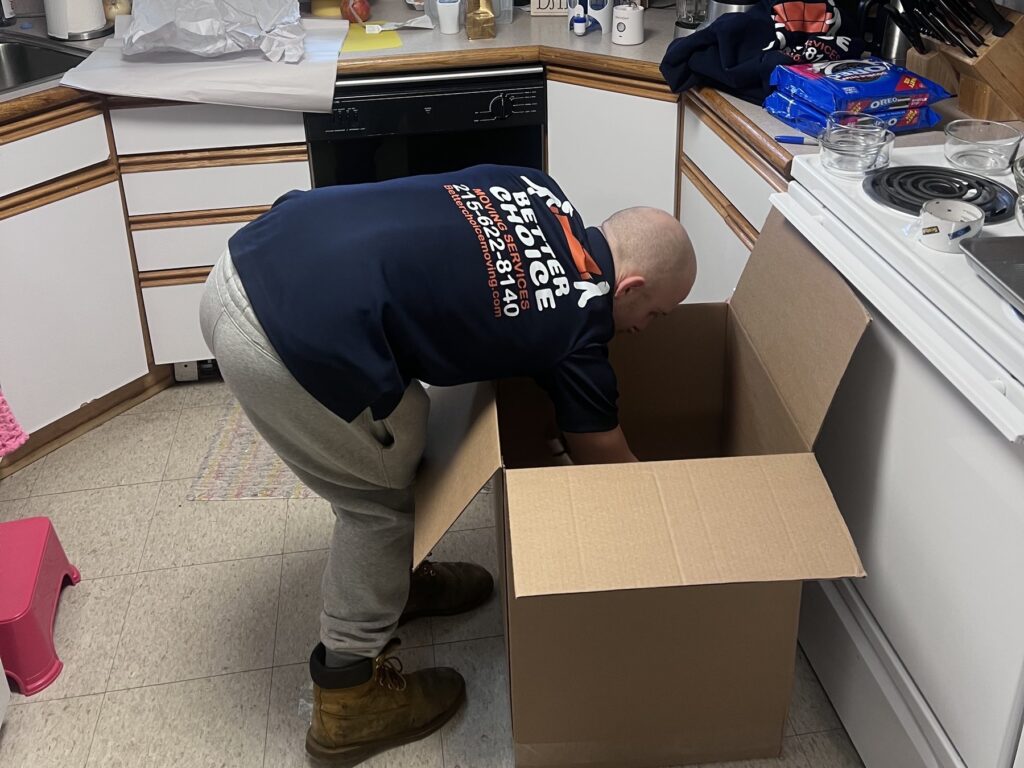
When we walk through a home before a move, the kitchen is almost always the room people are most worried about. It makes sense. It has more small, breakable things than any other room in the house, from Grandma’s serving platter to the wine glasses you got as a wedding gift, and it’s the room you still need to use right up until move week.
The good news is that packing a kitchen well isn’t a secret. It comes down to the right boxes, a lot of packing paper and a sensible order. Here’s how our packers do it, so you can pack your own kitchen with confidence or know exactly what to expect if you’d rather hand it off.
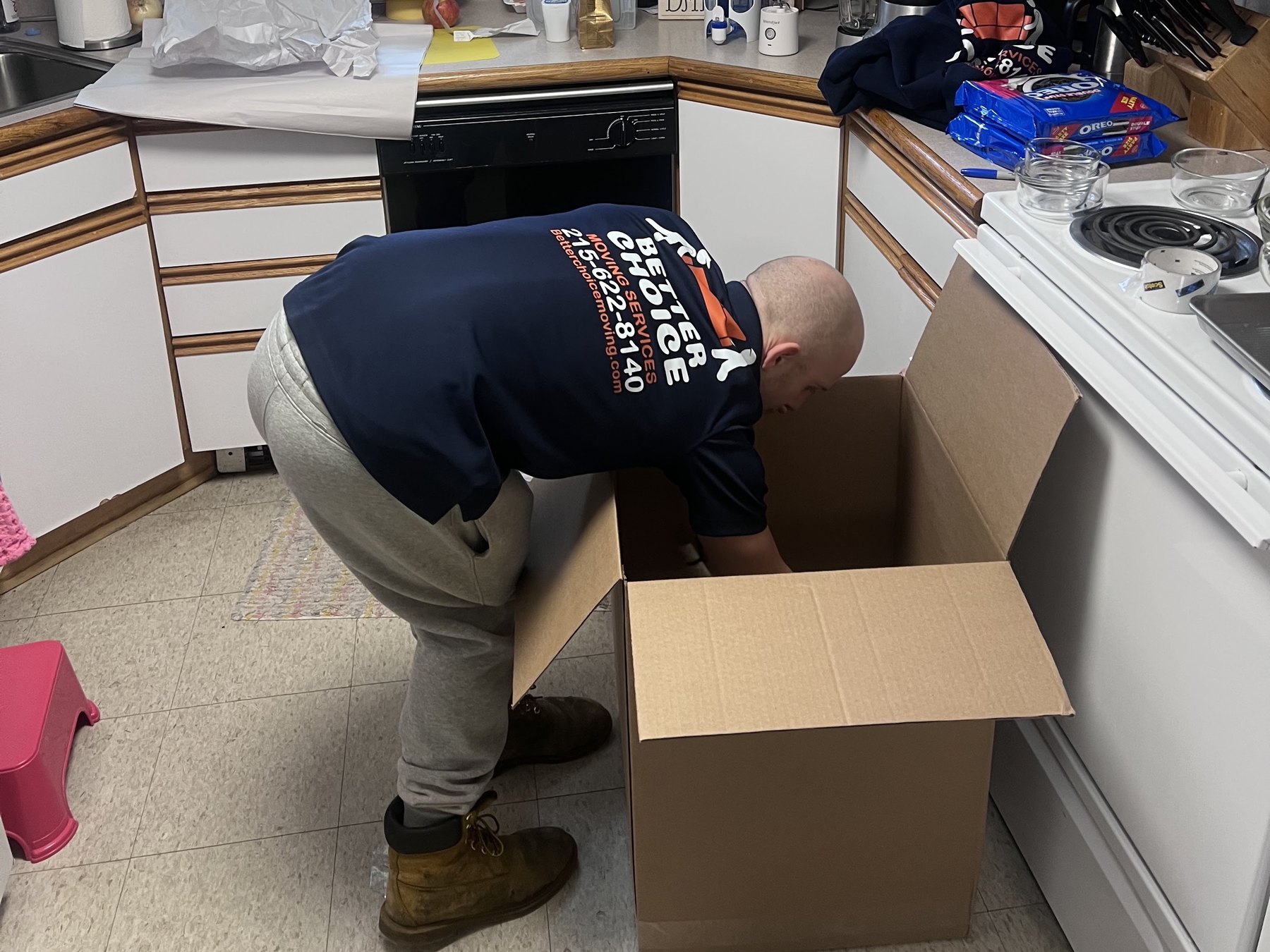
Start with the right supplies
Most kitchen breakage comes from using the wrong box, not from careless handling. Grocery store boxes and thin liquor boxes look sturdy, but they crush when a heavier box is stacked on top. Before you pack a single plate, gather:
- Dish packs. Double-wall boxes made for dishes and glassware. They’re the most important supply in the kitchen.
- Cell dividers for glasses and stemware.
- Small and medium boxes for pots, pans, pantry items and small appliances.
- Plenty of plain packing paper. Plain, not newspaper, which leaves ink on everything and has to be washed off later. Plan on more than you think you’ll need.
- Good packing tape and a thick marker. Tape the bottom seam twice, and label every box on the side so it can be read when stacked.
Pack in the right order
You still have to eat while you’re packing, so the kitchen should be packed in stages, starting with what you use least and ending with what you use every day.
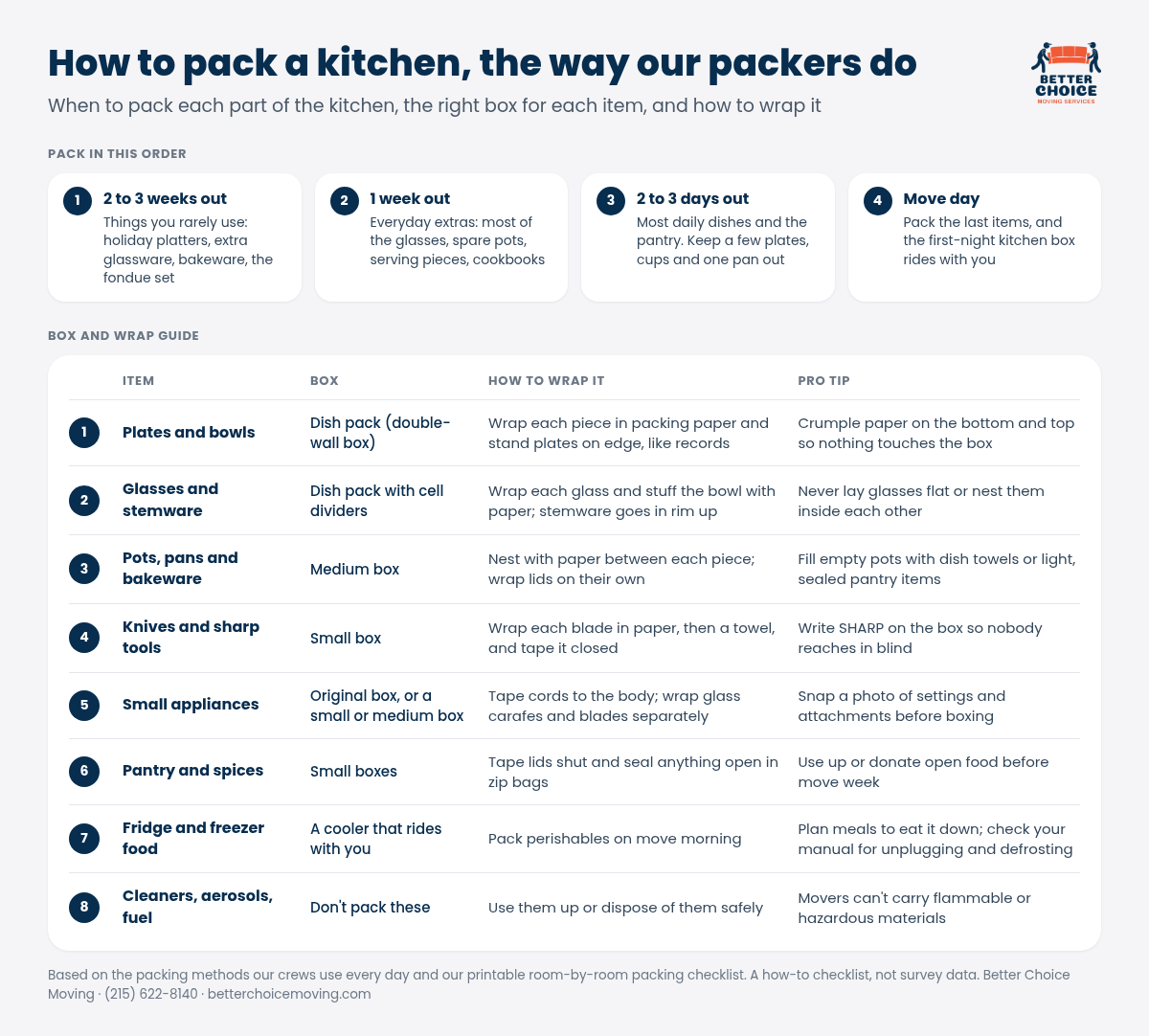
Two to three weeks out, pack the things that only come out a few times a year: holiday platters, the extra set of glasses, specialty bakeware, the fondue set. A week out, move on to everyday extras like spare pots, serving pieces and cookbooks. Two or three days out, pack most of the daily dishes and the pantry, leaving out just a few plates, cups, one pan and a set of utensils. On move day, those last few items go in a box, and your first-night kitchen box rides with you.
How to wrap the tricky things
Plates and bowls
Crumple a layer of packing paper in the bottom of a dish pack first. Wrap each plate on its own, then stand plates on edge, like records in a crate, instead of stacking them flat. Plates are much stronger on their edge than flat, so this one change prevents a lot of breakage. Fill any gaps with crumpled paper and add another layer on top before you tape it shut. If the box rattles when you gently rock it, it needs more paper.
Glasses and stemware
Use a dish pack with cell dividers. Wrap each glass individually and stuff a little paper inside the bowl. Stemware goes in rim up, with extra paper around the stem, which is the weakest point. Never nest glasses inside each other, and never lay them on their sides loose in a box.
Pots, pans and knives
Pots and pans can nest with a sheet of paper between each one, with lids wrapped separately. Empty pots are great for dish towels, oven mitts or light, sealed pantry items. Knives deserve real care: wrap each blade in paper, then in a towel, tape it closed and write SHARP on the box so nobody reaches in without looking.
Small appliances
If you still have the original boxes, use them. Otherwise, a small or medium box with paper on all sides works well. Tape cords to the appliance, wrap glass carafes and blender jars on their own, and snap a quick photo of any settings or attachments so setup is easy at the new house.
The fridge, the pantry and what not to pack
Start planning meals around what’s in the freezer and pantry two weeks out, so there’s less to move. Unopened, in-date non-perishables you won’t take along can go to a local food pantry. If you’re moving this fall, our Fill the Truck for Bucks County drive is collecting for local families, with drop-off at our Quakertown warehouse.
For the refrigerator, check your owner’s manual for how far ahead to unplug it so the freezer can defrost and dry, and keep perishables in a cooler that travels with you. Seal spices, oils and anything already open in zip bags.
One important rule: movers can’t carry flammable or hazardous materials. Aerosol cans, lighter fluid, propane and harsh cleaning chemicals should be used up or disposed of properly before move day. Our printable packing checklist has the full list, room by room.
Don’t forget the first-night kitchen box
This is the box you’ll be glad you packed. Label it clearly and keep it with you, or ask your crew to load it last so it comes off first. A good one holds:
- A few plates, cups, bowls and a set of utensils
- One pan, a small pot and a sharp knife, wrapped
- Coffee maker, coffee and mugs
- Dish soap, a sponge, paper towels and trash bags
- Snacks, bottled water and a few easy breakfast items
- Scissors or a box cutter for opening everything else
Label so the kitchen gets unpacked first
Mark every kitchen box with the room and a short list of what’s inside, and write FRAGILE on dish packs. On move day, the crew can set kitchen boxes right on the counters or in the kitchen at the new home, so you’re not hunting through the garage for the coffee maker the next morning. Whether you’re moving into a new build in Center Valley, a farmhouse outside Quakertown or a townhome in Lansdale, a kitchen that’s unpacked on day one makes the new place feel like home much faster.
When it makes sense to hand the kitchen off
Plenty of families pack the whole house themselves and leave only the kitchen to us, because it takes the most time and the most care. Our crew arrives with dish packs, cell dividers and paper, packs everything the way this guide describes and labels every box. You can learn more about kitchen packing as part of our partial packing service, or see our full-service packing if you’d like the whole house done. Planning the rest of the move? Our 8-week moving checklist and move-week game plan pick up where this leaves off.
Questions about packing your kitchen?
We’re a family-owned, licensed and insured mover based in Hatfield, with our own storage warehouse in Quakertown, and we help families all over Montgomery, Bucks, Chester and Lehigh counties. If you have a question about a china cabinet, a wine collection or anything else in your kitchen, give us a call at (215) 622-8140 or visit betterchoicemoving.com. When you’re ready, you can schedule a free estimate or book your move online.
About the chart: it shows the packing order and box-and-wrap methods our packers use, the same ones in our printable packing checklist. It’s a how-to checklist, not survey data.