
Some moves are across town. Others start with a new job in Charlotte, a grandchild in Boston or a long-planned retirement near the Gulf. When the next home is in another state, the move itself changes too: more miles, more days, more paperwork, and a different set of rules than a local move.
We help families from Montgomery, Bucks, Chester and Lehigh counties make that trip, and the best out-of-state moves we see have one thing in common. The family knew what to expect before the truck showed up. Here’s how we’d walk a friend through it, including what federal rules say a licensed interstate mover owes you at every step.
Step one: make sure you’re hiring a mover
When you search for out-of-state movers, a lot of the names that come up are brokers, not movers. A broker books your move and hands it to another company. A mover owns the trucks and employs the crew. Both have to be registered with the Federal Motor Carrier Safety Administration (FMCSA), and you can look any company up in FMCSA’s registered mover search to see which one it is. We wrote more about this in moving broker vs. moving company.
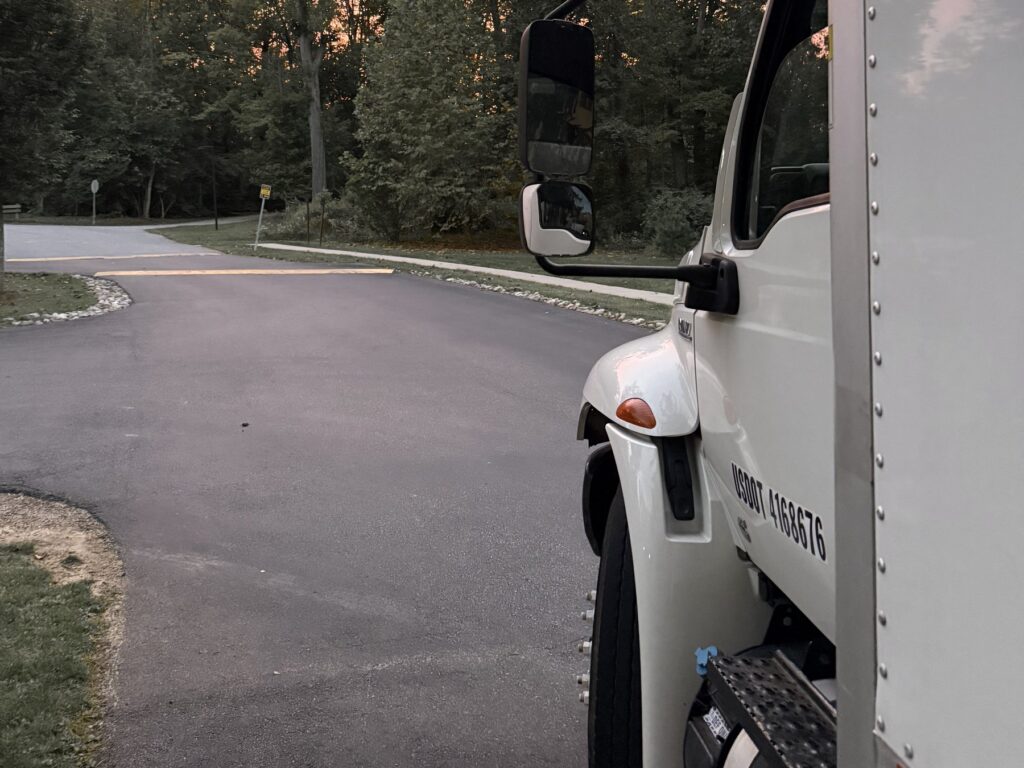
FMCSA also suggests a simple check on moving day: the name and USDOT number on the truck should match the company you hired. If they don’t, ask why before anything gets loaded. Ours is painted on the cab: USDOT 4168676.
What a licensed interstate mover has to give you
Interstate household moves follow federal rules, mostly in 49 CFR Part 375. You don’t need to read the regulations, but it helps to know the big ones, because they protect you.
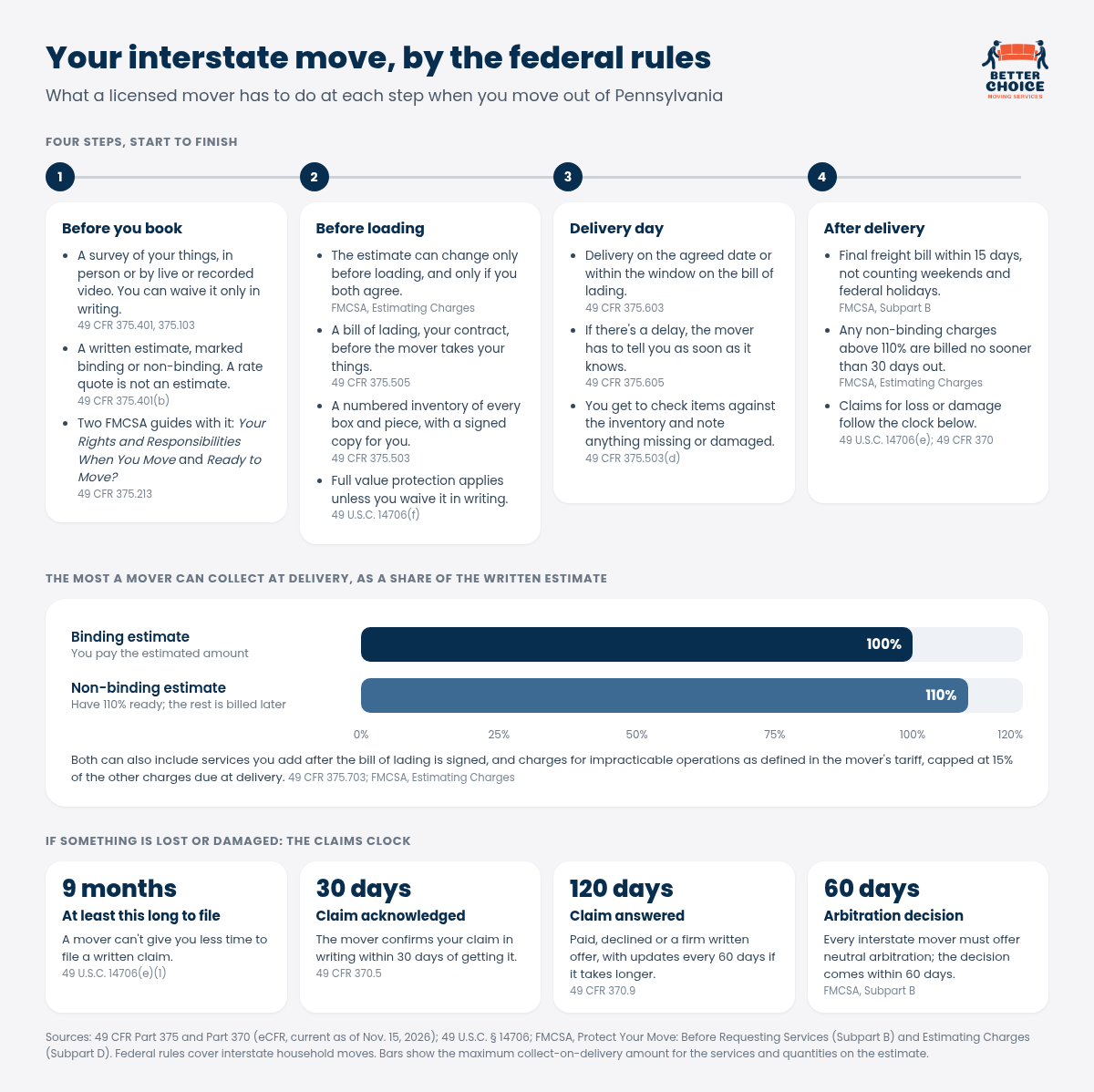
A survey and a written estimate. The mover has to look at what you’re actually moving, either in your home or by live or recorded video, and give you a written estimate based on it. You can waive the survey, but only in writing and before loading. A number tossed out over the phone, sight unseen, is one of the red flags FMCSA warns about.
Two booklets. Along with the estimate, the mover must give you (or link you to) FMCSA’s Your Rights and Responsibilities When You Move and Ready to Move? They’re short and worth a read with a cup of coffee.
A bill of lading and an inventory. The bill of lading is your contract, and it has to be issued before your things go on the truck. The inventory lists every box and piece, each one gets a number, and you get a signed copy before or at loading. Walk through it with the crew lead. It’s the same list you’ll check against on delivery day.
Protection for your things. By federal law, an interstate move goes under full value protection unless you sign a waiver choosing the minimal option, which pays by weight, not by what an item is worth. Read that line of the bill of lading carefully. FMCSA also says to list your “articles of extraordinary value,” things that are worth a lot for their weight like jewelry, silver, china or antiques, in writing. If you don’t, the mover’s liability for those pieces can be limited.
Binding vs. non-binding estimates
This is the part families ask about most, so here it is plainly. A binding estimate means the price for the items and services listed is the price you pay at delivery. A non-binding estimate is the mover’s best estimate, and the final bill is based on the actual weight and services. With a non-binding estimate, FMCSA says to have 110% of the estimate ready at delivery. If the bill comes in higher, the mover has to deliver your things once you pay that 110% and wait at least 30 days to bill the rest.
Either way, two things can be added on delivery day: services you asked for after signing the bill of lading, and charges for “impracticable operations” as defined in the mover’s tariff, which are capped at 15% of the other charges due at delivery. The easiest way to avoid surprises is an accurate inventory up front, so tell your estimator about the basement storage room, the shed and the attic before the estimate is written, not on moving day.
Red flags worth walking away from
From FMCSA’s Spot the Red Flags list, these are the ones we’d want any friend to know:
- An estimate given over the phone or online without anyone seeing your things.
- No written estimate, or “we’ll figure out the price after we load.”
- A demand for cash or a large deposit before the move.
- Being asked to sign blank documents.
- No copy of the two FMCSA booklets.
- A website with no local address and no registration or insurance details.
- A rental truck shows up instead of a company-owned, marked truck.
A planning rhythm for leaving Pennsylvania
Six to eight weeks out: get your walkthrough and written estimate, and settle your load and delivery dates. Decide what isn’t making the trip. It’s a long way to haul furniture that won’t fit the new place, and our guide to furniture that won’t fit the new house helps with keep, store, donate or haul away.
Four weeks out: plan the packing. Long hauls are harder on boxes than a 20-minute drive, so pack heavy things in small boxes and fill every gap. Our kitchen packing guide shows how we do the hardest room, or we can handle it with full or partial packing. Start clearing the garage too, since paint, propane and gasoline can’t ride on the truck. Here’s what movers won’t take.
Moving week: pack a box or suitcase that rides with you: medications, chargers, documents, a few days of clothes, and anything irreplaceable like jewelry and family papers. Your things may be on the road for a few days, so plan your first nights at the new house around that.
Loading day: walk the inventory with the crew lead, read the bill of lading before you sign, and keep your copies somewhere you’ll find them.
Delivery day: check items against the inventory as they come in, and write down anything missing or damaged right on the paperwork. If you need to file a claim later, federal law gives you at least nine months to do it in writing.
Pennsylvania loose ends
- Your car. Register your vehicle in your new state first. Once you have the new plate, mail your Pennsylvania plate to PennDOT’s Bureau of Motor Vehicles, Return Tag Unit, P.O. Box 68597, Harrisburg, PA 17106-8597, so it’s marked “dead” on your record. PennDOT notes that if you cancel your Pennsylvania insurance, the plate and registration card need to reach it within 30 days to avoid a three-month registration suspension, so time the insurance switch with the plate return.
- State income tax. For the year you move, the Pennsylvania Department of Revenue has you file the PA-40 as a part-year resident. Pennsylvania taxes all of your income for the part of the year you lived here, plus any Pennsylvania-source income after you leave.
- Mail. Set up USPS forwarding a couple of weeks ahead. Our address-change checklist covers the USPS timing.
When the dates don’t line up
Out-of-state moves often come with a gap: you close on the Pennsylvania house before the new one is ready, or a job starts before the lease does. Our move-and-store service picks up your things, keeps them in vault storage at our Quakertown warehouse at 420 Station Rd, and sends them on when you have the keys. The closing-date gap guide explains how it works.
We’d be glad to help you go
We’re a family-owned mover based at 7 Church Rd in Hatfield, licensed for interstate moves under USDOT 4168676 and MC-1671186. Every Better Choice interstate move travels as a private load on our own truck, with our own crew, from your door to the new one. We serve families across Montgomery, Bucks, Chester and Lehigh counties. Learn more about our interstate moving, or just call us with your questions at (215) 622-8140. When you’re ready, you can schedule an estimate or book your move online.
About the chart: the steps, collection limits and claim deadlines come from FMCSA’s Estimating Charges and Before Requesting Services From Any Mover pages, the federal household goods rules in 49 CFR Part 375 and claims rules in 49 CFR Part 370, and the claim filing period in 49 U.S.C. § 14706. FMCSA’s Protect Your Move hub links to both booklets. Plate and insurance details come from PennDOT’s Return a Registration Plate and Insurance Overview pages, and tax details from the PA Department of Revenue’s personal income tax guide. Rules can change, so check the current versions before your move.