
Most people spend weeks thinking about boxes, dates and who’s taking the couch, and about five minutes thinking about what happens if something gets damaged. That’s understandable. Nobody plans a move expecting a scratch on the dining table. But the coverage you pick, and the paperwork you sign, decide what happens if something does go wrong.
We’d rather you understand it before moving day than learn it after. Here’s how protection for your belongings works on a Pennsylvania move, in plain English, the way we’d explain it to a friend across the kitchen table.
Start with the default: 60 cents per pound
For moves that stay inside Pennsylvania, the Pennsylvania Public Utility Commission (PUC) requires every licensed household goods mover to hand you a form called “Information for Shippers.” It says it directly: unless you choose more, you are protected “only up to but not exceeding 60 cents per pound, per article,” and that “this minimum coverage may not be adequate protection.”
That word “pound” is the part that surprises people. Basic coverage is based on what an item weighs, not what it’s worth.
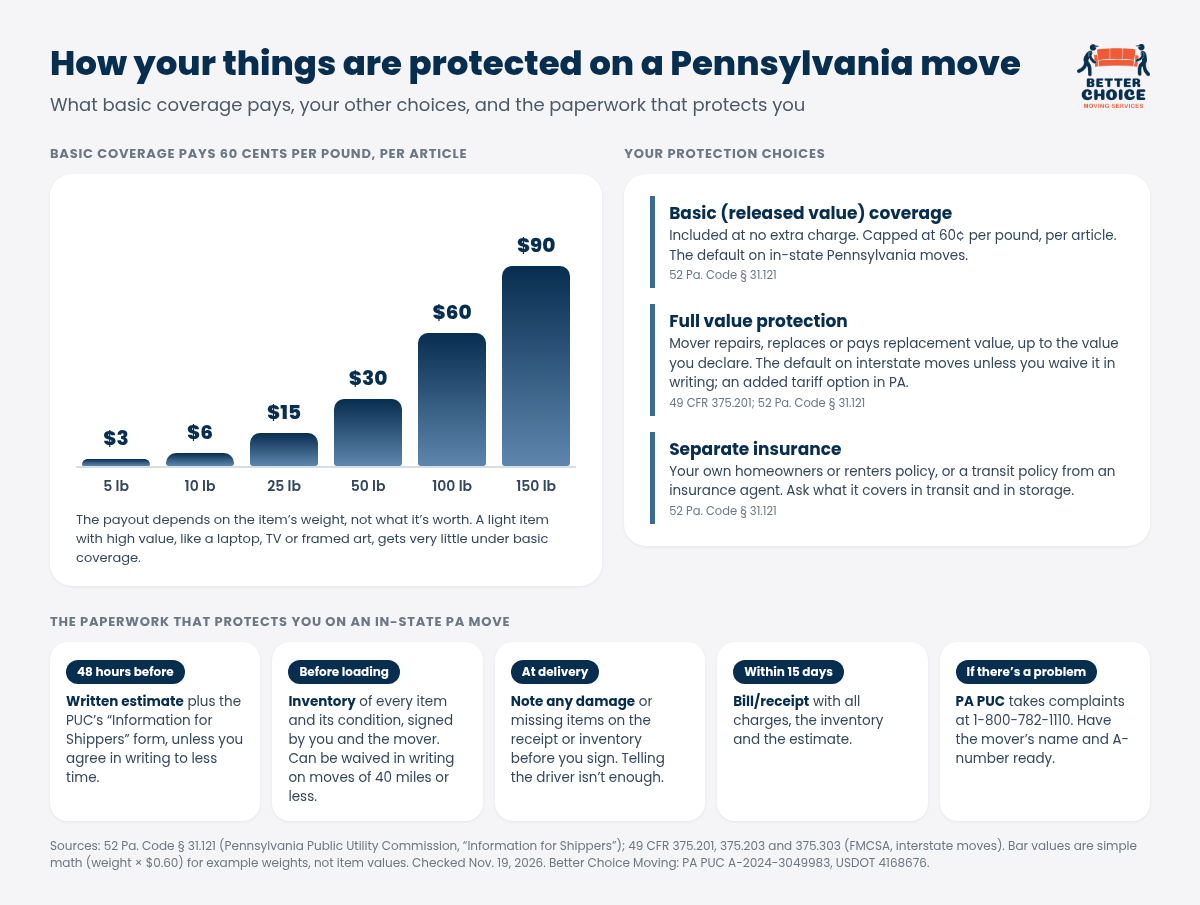
Run the math and you can see why it matters. A 10-pound item is capped at $6 under basic coverage. A 50-pound item is capped at $30. That might be fine for a box of towels. It isn’t much for a flat-screen TV, a laptop, a framed painting or Grandma’s lamp, which are all light and can be worth a lot.
Your three ways to protect your things
- Basic (released value) coverage. Included at no extra charge, capped at 60 cents per pound, per article. It’s the starting point on in-state Pennsylvania moves.
- Full value protection. The mover is responsible for repairing the item, replacing it, or paying its replacement value, up to the total value you declare for the shipment. In Pennsylvania, the PUC form says you can get protection above 60 cents per pound “by paying a higher tariff rate applicable to the coverage you desire.” On interstate moves, federal rules make full value protection the default unless you waive it in writing (49 CFR 375.201).
- Separate insurance. The PUC form also points out you can protect the full value of your goods with a transit insurance policy through an insurance agent. Some homeowners and renters policies cover belongings in transit or in storage and some don’t, so a five-minute call to your agent is worth it.
There’s no single right answer. A family moving a starter apartment’s worth of furniture across town may be comfortable with basic coverage. A family with antiques, art or a home office full of electronics usually isn’t. The point is to choose on purpose, not by default.
A few habits that make any coverage work better
Coverage is the safety net. Careful handling is what keeps you from ever needing it. Whatever level you choose, these steps help:
- Make a short list of high-value items. Jewelry, art, collectibles, electronics and anything sentimental. Under federal interstate rules, if you have full value protection and don’t list items worth more than $100 per pound in writing, the mover’s liability for them can be limited to $100 per pound (49 CFR 375.203). Listing them is a good habit on any move.
- Keep the irreplaceable with you. Passports, medications, cash, jewelry, family photos and hard drives ride best in your own car.
- Take quick photos before packing. A few phone pictures of your nicer furniture and electronics give you a clear “before” if you ever need it.
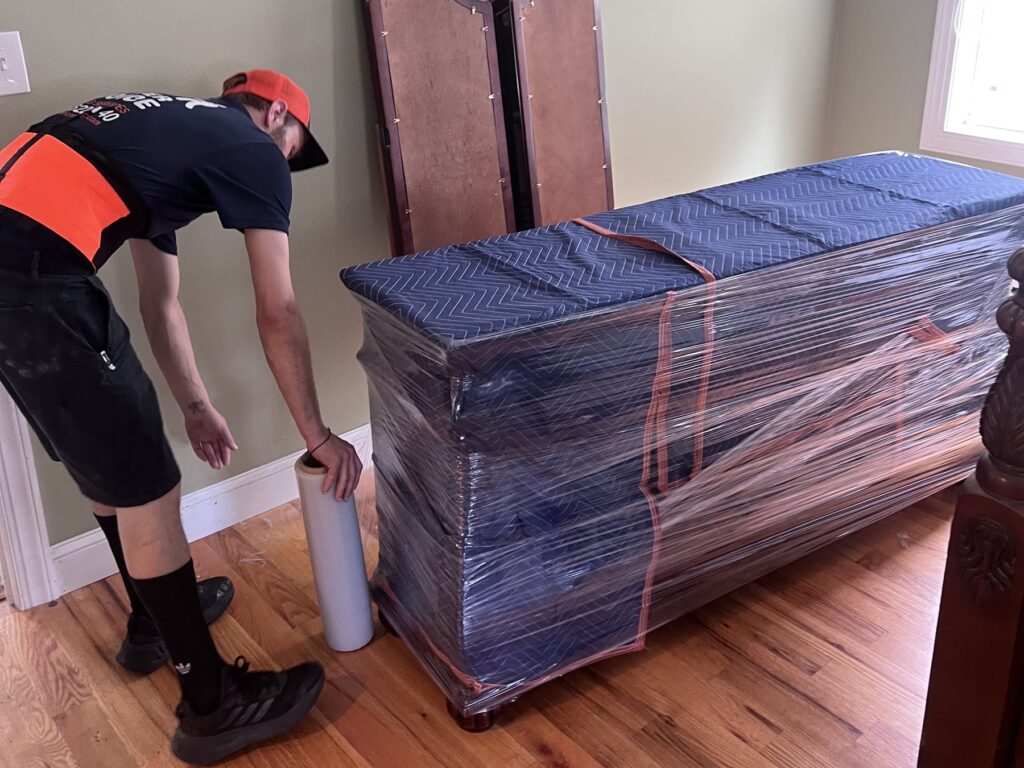
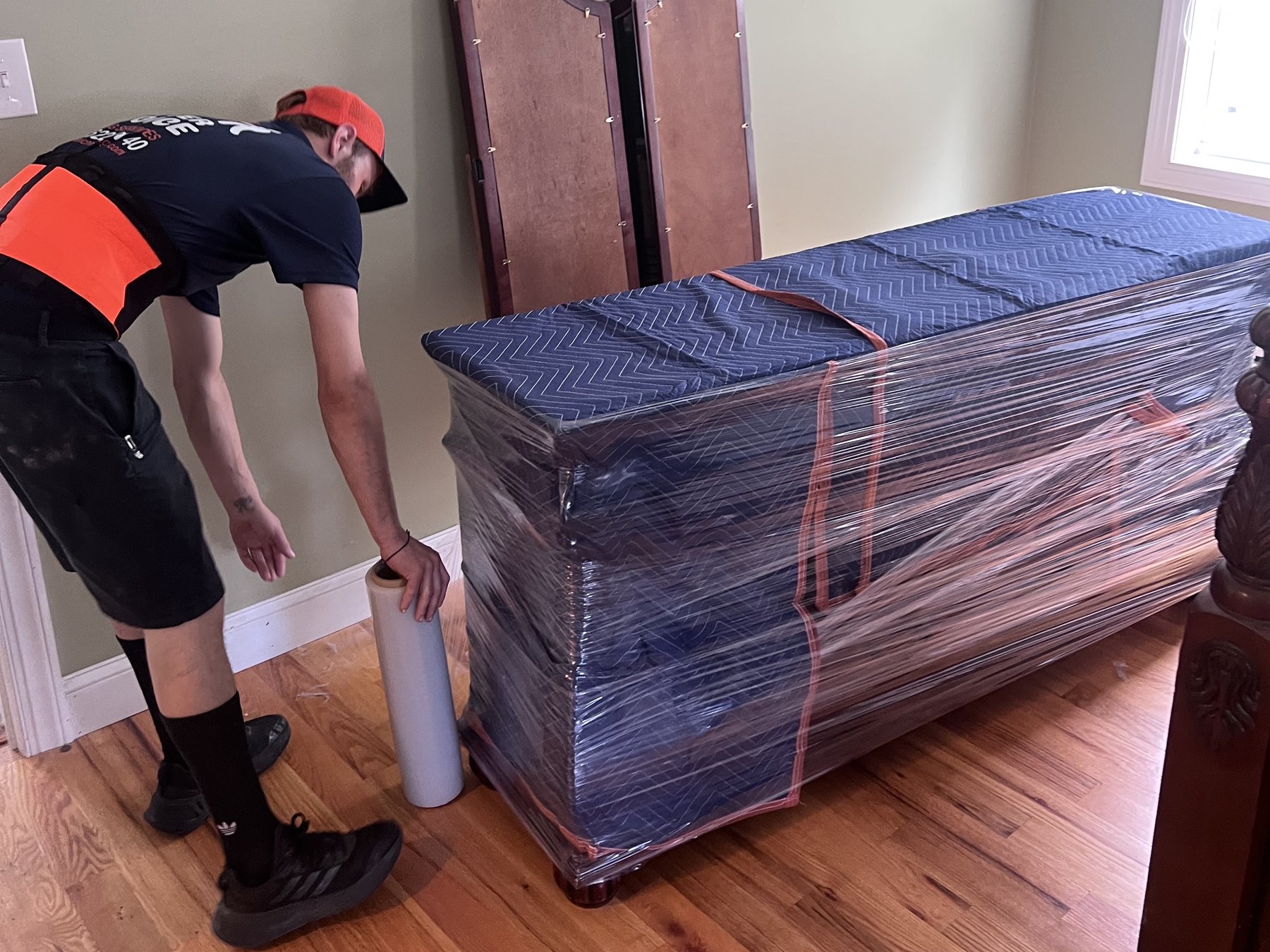
- Ask how big pieces will be wrapped. On our moves, furniture gets padded in moving blankets and banded or shrink-wrapped, like the dresser above, and we protect your floors, stairs and door frames too. If you’re packing yourself, our kitchen packing guide covers the fragile stuff.
The paperwork that protects you
For in-state moves, the PUC’s Information for Shippers rules lay out what you should get and when:
- A written estimate at least 48 hours before the move, along with the Information for Shippers form, unless you agree in writing to a shorter window.
- An inventory before loading, listing every item and its condition, signed by you and the mover. On moves of 40 miles or less, you can waive this in writing.
- A chance to note damage before you sign. At delivery, write any damaged or missing items on the receipt or inventory before signing. The form is blunt about it: “telling the driver about these things is not enough.”
- A bill/receipt within 15 days that details all charges and includes the inventory and estimate.
Moving out of state? The federal rules are different and a little more detailed. Our guide to moving out of state from Pennsylvania walks through them, including the at-least-nine-month window to file a claim.
Make sure your mover is licensed
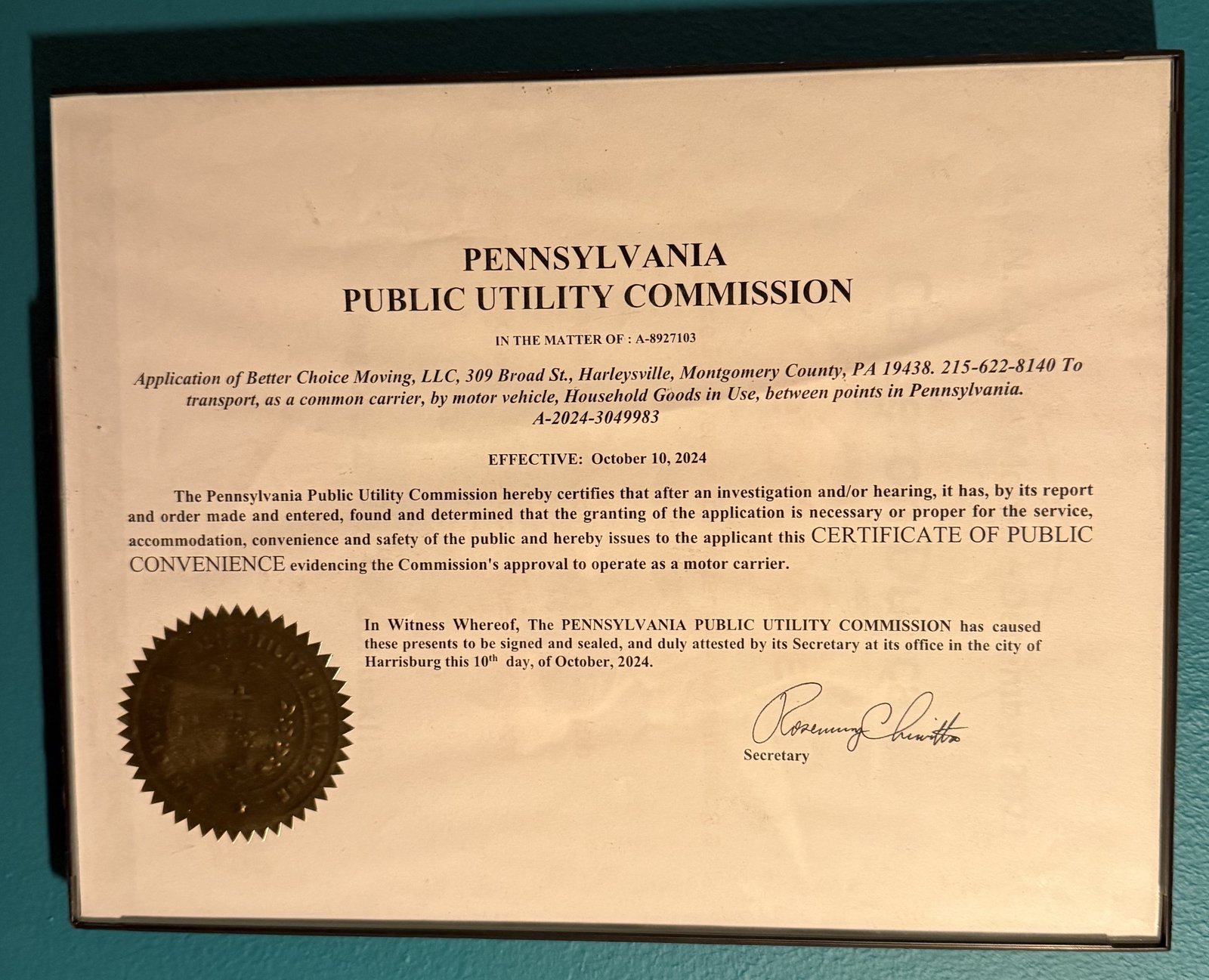
All of these protections assume you’re working with a mover the PUC has certified to move household goods in Pennsylvania. Ask for the mover’s PUC number (it starts with an A) and, for interstate moves, its USDOT number. Ours hangs on the office wall: Better Choice Moving is certified by the PA PUC under A-2024-3049983 and registered with USDOT 4168676, fully licensed and insured for local and interstate moves. If you ever need to file a complaint about any mover, the PUC’s line is 1-800-782-1110. And if you’re not sure whether you’re talking to a mover or a broker, here’s how to tell the difference.
What about things in storage?
If your move has a gap between closings and your belongings will spend a few weeks or months in storage, ask how they’re protected while they’re stored, not just while they’re on the truck, and check what your own homeowners or renters policy says about items in storage. With our move-and-store service, your things are loaded into vault storage at our Quakertown warehouse at 420 Station Rd and delivered when you have the keys. Our closing-date gap guide explains how that works.
Questions? Just ask
Coverage and paperwork are the least exciting part of a move, and we’re always glad to walk you through them before moving day. Better Choice Moving is a family-owned mover at 7 Church Rd in Hatfield, serving families across Montgomery, Bucks, Chester and Lehigh counties. Call us at (215) 622-8140, plan your move with us, or book your move online.
About the chart: coverage terms, paperwork timing and the PUC complaint line are from the Pennsylvania Public Utility Commission’s “Information for Shippers” form at 52 Pa. Code § 31.121; interstate rules are from 49 CFR Part 375 (sections 375.201, 375.203 and 375.303), checked Nov. 19, 2026. Bar values are simple arithmetic (weight × $0.60) for example weights and are not item values. This is general information, not legal or insurance advice; your mover’s written paperwork and tariff govern your move.